
📚 Table of Contents
- 1. Introduction
- 2. What Is Generative AI?
- 3. Understanding Security in the AI Era
- 4. How Hackers Are Using Generative AI: Real Examples
- 5. How Security Experts Are Fighting Back With AI Tools
- 6. Key Areas Where Generative AI Is Changing Cybersecurity Forever
- 7. Risks of Generative AI: How Has It Affected Security?
- 8. What the Future Holds: Generative AI and the Next Wave of Cybersecurity
- 9. Ethical & Legal Concerns: Are We Moving Too Fast?
- 10. Conclusion: The Future of Security in the Generative AI Era
🟠 1. Introduction
How has generative AI affected security in 2025? The answer might surprise you. What started as an innovation to boost creativity and productivity has now become both a blessing and a threat in the world of cybersecurity.
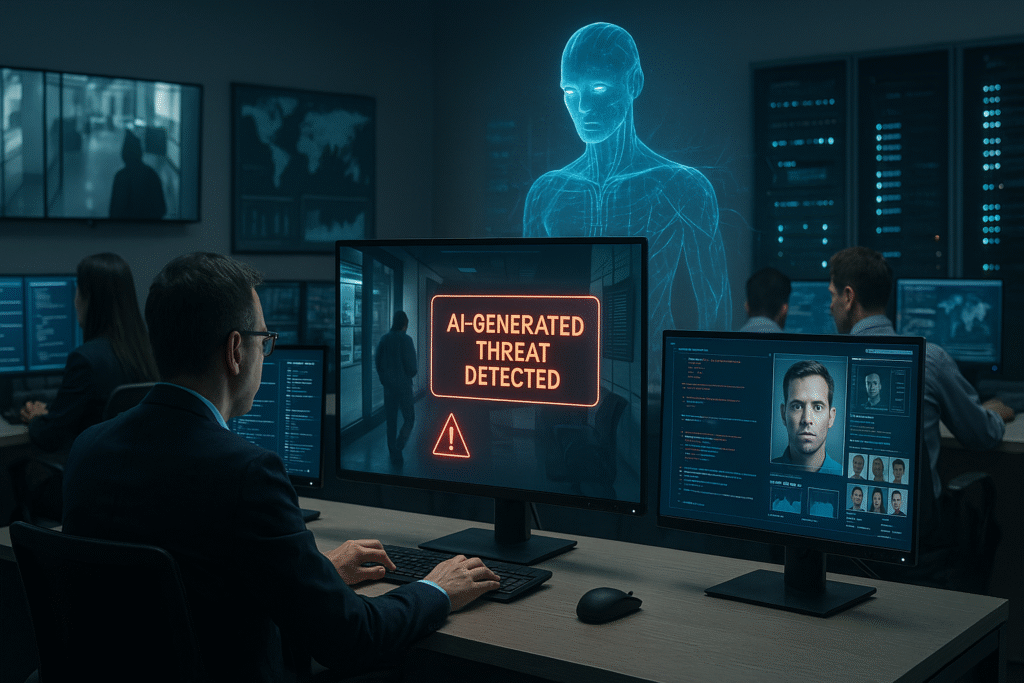
Imagine a world where AI can write malware, impersonate your voice, or craft the perfect phishing email in seconds — that world is no longer fiction. In 2025, Generative AI isn’t just generating text and images; it’s also reshaping the way cyberattacks are launched — and defended against.
From deepfake videos used in political manipulation to AI-written zero-day exploits, the evolving threat landscape clearly shows how has generative AI affected security on multiple fronts. The shift has been rapid and alarming. But it’s not all bad news — the same AI is now helping defenders automate threat detection, enhance security protocols, and outsmart cyber attackers in real time.
In this blog, you’ll learn:
- How has generative AI affected security in both empowering and threatening ways
- The latest real-world use cases — both offensive and defensive
- What security professionals, companies, and governments are doing to respond
- And how you can stay ahead in this AI-dominated cyber age
🟠 2. What Is Generative AI?
Generative AI is a form of artificial intelligence designed to create original content — like human-like text, code, images, or audio — based on training data. It's not just about completing a task; it’s about thinking creatively, like a human.
You’ve probably heard of ChatGPT or Google Gemini, but that’s just the surface. To truly grasp how has generative AI affected security, you need to look deeper — these tools can generate blogs, scripts, emails, and unfortunately, even viruses or fraudulent messages when misused.
✨ Common Applications of Generative AI:
- Text generation (emails, articles, reports)
- Code writing and debugging
- Art and video creation
- Language translation
- Threat simulation and analysis in cybersecurity
This power makes generative AI a double-edged sword — it can build or break the digital world.
🔐 3. Understanding Security in the AI Era
Cybersecurity has always been about staying one step ahead of threats. But in 2025, with generative AI evolving at lightning speed, the landscape clearly reveals how has generative AI affected security, making traditional firewalls, antivirus tools, and human analysts no longer enough to tackle new challenges.
Let’s understand why.
🔎 How Has Generative AI Affected Security Threats?
In the past, cybercriminals needed time, skill, and manual effort to design an attack. Now? Generative AI tools like large language models (LLMs) can:
- Write malicious code with near-human fluency
- Generate phishing emails that mimic real corporate communication
- Clone a CEO's voice using deepfake technology
- Create fake news or manipulated content that influences public opinion
🧠 AI isn’t just automating crime — it’s innovating it.
⚔️ AI-Powered Threats We’re Seeing in 2025
Here are real-world AI threats that are increasing today:
| 🛑 Threat Type | 🔍 Description |
|---|---|
| AI-generated phishing | Hyper-personalized emails that bypass spam filters |
| Deepfake impersonation | Fake audio/video to trick employees or commit fraud |
| AI-written malware | Code generated using LLMs to exploit software vulnerabilities |
| Prompt injection attacks | Misusing AI prompts to manipulate output and leak sensitive data |
| Autonomous hacking systems | Self-learning AI that explores and attacks networks without human input |
🛡️ Security Teams Are Under Pressure
As threats become smarter, defenders must move faster. But many security teams still struggle with the question of how has generative AI affected security, especially when they lack the automation tools or expertise to counter AI-based attacks effectively.
Some of the key challenges are:
- Volume & Speed: AI threats evolve too fast for manual intervention
- Detection: It’s harder to spot realistic phishing or AI-generated code
- Skill Gap: There’s a lack of professionals trained in AI-security intersection
- Zero-Day Exploits: Generative AI can discover vulnerabilities no one knew existed
Result? Even big enterprises are struggling to protect data, reputation, and compliance.
📈 Why 2025 Is a Turning Point
What makes 2025 so critical is the mainstream adoption of AI by both good and bad actors. Generative AI is no longer niche — it’s in your browser, your phone, your apps.
This year:
- More than 70% of cyberattacks are now AI-assisted
- Over 65% of Fortune 500 companies are integrating AI into their security stack
- Governments are proposing laws to regulate AI use in cybersecurity
Generative AI has officially become both a weapon and a shield.
🚀 Explore Free AI Tools 2025🧠 4. How Hackers Are Using Generative AI: Real Examples
Generative AI isn’t just for creating blog posts, images, or chatbots. Sadly, it’s now being misused by hackers to plan and launch smarter cyber attacks — showing clearly how generative AI has affected security in 2025 by making threats more advanced and harder to detect.
Here are real examples of how cybercriminals are misusing AI:
🧨 1. AI-Generated Phishing Emails
Earlier, phishing emails had spelling mistakes and looked fake. But now with tools like ChatGPT or Claude, hackers create perfectly written, professional-looking emails.
🎯 Example:
A fake email that looks like it came from your bank, asking you to “verify” your account.
The email has your name, looks official, and even uses your bank’s exact logo — all generated by AI.
🎭 2. Deepfake Videos and Voice Scams
Hackers use AI to clone the voice or face of a real person.
🎯 Example:
A company’s employee gets a video call from someone who looks and sounds like their boss — asking to transfer money urgently.
But it's actually a deepfake created using AI tools.
🐍 3. AI-Written Malware
Now, hackers don’t need to write code from scratch. They use AI tools to generate dangerous software code that can hack into computers.
🎯 Example:
Using an AI tool, a hacker creates a “keylogger” that secretly records everything you type — including passwords.
🧪 4. Prompt Injection Attacks
This is when someone tricks an AI chatbot into revealing private info or doing something bad.
🎯 Example:
A user types a special command in an AI tool that makes it reveal personal data from a company's database.
📡 5. Smart Social Engineering
Hackers now use AI to learn about a person’s habits, style, and social media activity — and use that info to fool them.
🎯 Example:
A fake LinkedIn message offering a job — written in a way that matches your industry, interest, and language.
⚠️ Why This Is a Big Problem
- These attacks look real — very hard to detect
- They can be launched by anyone, even low-skill hackers
- They spread faster than ever before
In short, how has generative AI affected security becomes clear when we see how it’s helping hackers become more powerful and more dangerous.
🛡️ 5. How Security Experts Are Fighting Back With AI Tools
Hackers are using AI — but so are the defenders.
In 2025, cybersecurity teams are turning to generative AI tools to detect, prevent, and stop attacks faster than ever before. This major shift highlights how has generative AI affected security, not just by empowering attackers, but also by giving defenders smarter tools to fight back.
Let’s look at how AI is helping protect us from cyber threats.
🚀 Explore Free AI Tools 2025🧠 1. AI-Powered Threat Detection
Old antivirus tools only looked for known threats. But now, AI-powered security solutions can detect unknown, new types of attacks (zero-day threats) by learning behavior and identifying unusual patterns.
✅ Example:
An AI tool sees unusual activity in a company’s network — like someone logging in from two different countries at the same time.
It instantly blocks the session and alerts the security team.
🛑 2. Smart Email Filtering
Tools like Google Workspace AI, Microsoft Defender, and others use AI in cybersecurity to scan billions of emails in real time, identifying threats before they reach users.
✅ Result:
AI catches phishing emails before they reach your inbox — even if they look real.
🔍 3. Real-Time Risk Scoring
Generative AI systems give each user, app, or IP address a “risk score” based on behavior.
✅ Example:
If a login comes from a new device at 3 AM — the AI gives it a high-risk score and blocks it or asks for extra verification.
💡 4. Automated Incident Response
Earlier, security teams had to act manually. Now, AI bots respond in seconds.
✅ Example:
If malware is detected, AI can isolate the infected system and stop it from spreading — without needing human input.
🗣️ 5. Natural Language Reports
AI-driven cyber defense tools like Darktrace, CrowdStrike, and Palo Alto Cortex XSIAM can now explain threats in simple, human-like language, making it easier for security teams to respond quickly.
✅ Benefit:
Even non-technical managers can understand what went wrong — and how to fix it.
🌐 Bonus: AI + Human = Best Defense
AI tools are fast. But human experts are still needed to guide and verify. The future of cybersecurity is AI-assisted, not AI-only.
⚙️ 6. Key Areas Where Generative AI Is Changing Cybersecurity Forever
Generative AI isn’t just a tool — it’s completely changing the way cybersecurity works. In fact, if we look closely at how has generative AI affected security, we can see major transformations unfolding in 2025 across five key areas.
Here’s a closer look:
🔐 1. Passwordless Authentication
Traditional passwords are easy to guess or steal. Now, AI is helping create passwordless login systems using:
- Facial recognition
- Voice authentication
- Behavioral patterns (like how you type or swipe)
✅ Benefit:
Harder to hack, easier for users.
🔁 2. Predictive Threat Intelligence
Generative AI learns from global attack data and predicts future cyber threats before they happen.
✅ Example:
It may warn a company that it could be targeted by ransomware — weeks in advance.
This helps organizations prepare in advance, instead of reacting after damage.
🕵️♂️ 3. Deepfake & Synthetic Threat Detection
Hackers now use deepfakes (fake videos, voices) to trick people. But AI can detect these better than humans.
✅ Tools:
- Intel’s FakeCatcher
- Microsoft Video Authenticator
✅ Usage:
Financial firms and government agencies now rely on AI to flag suspicious videos or calls.
📱 4. Mobile & IoT Security
In 2025, more people use mobile and smart devices (IoT). Generative AI helps by:
- Monitoring app behavior
- Detecting unknown threats
- Stopping remote hacking in real time
✅ Example:
AI can stop a smart home speaker from leaking personal data.
🧑💻 5. AI in SOC (Security Operations Center)
Modern SOC teams use AI to analyze huge amounts of logs and alerts — in real time.
✅ Earlier:
Human analysts took hours to go through logs.
✅ Now:
AI does this in seconds, highlighting the most dangerous threats instantly.
🚀 Summary: AI Is Not the Future — It's the Present
All these changes clearly show how has generative AI affected security — it’s not just a trend anymore. It’s already reshaping the battlefield, and cybersecurity experts must adapt quickly to keep up.
⚠️ 7. Risks of Generative AI: How Has It Affected Security?
Generative AI has brought massive power into cybersecurity — but with great power comes serious risks. In fact, ignoring how has generative AI affected security can lead to major failures, from data breaches to system takeovers.
Let’s understand some of the biggest concerns that show exactly how has generative AI affected security in 2025 and beyond:
Risks of Generative AI: How Has It Affected Security?
🧠 1. Hallucinations and Wrong Outputs
Sometimes, AI systems generate false or misleading information (called "hallucinations").
🧨 Risk:
An AI might wrongly flag a harmless file as malware — or miss a dangerous one.
⚠️ Impact:
This could lead to system downtime or real breaches.
🔄 2. Data Poisoning Attacks
Hackers can feed false data into the AI system — changing how it thinks and reacts.
🎯 Example:
Feeding fake behavior logs to trick AI into trusting harmful files.
⚠️ Result:
AI might stop detecting real threats.
🕸️ 3. Overdependence on AI
Some companies stop hiring skilled human analysts and depend completely on AI.
⚠️ Why it’s dangerous:
- AI can’t understand business context.
- It may fail in unpredictable attacks.
- Humans are still needed to take judgment calls.
👥 4. Privacy & Data Leakage
Generative AI models often need access to massive datasets, including sensitive personal data.
🧾 Risk:
Data used for training or processing may leak — leading to privacy violations.
🔍 Example:
An AI model trained on customer support chats might accidentally reveal user details.
🤖 5. Misuse by Hackers
Here’s the biggest twist: Hackers are also using Generative AI to create:
- Polished phishing emails
- Fake voices to impersonate CEOs
- Deepfake videos for scams
💡 Fun fact:
In 2024, a deepfake CEO voice was used to steal $25 million from a company in Hong Kong.
✅ Summary: Be Smart, Not Blindly Trusting
Generative AI is a powerful ally, but not a magic solution. To truly address how has generative AI affected security, teams must combine it with:
- Strong human supervision
- Clear ethical policies
- Backup plans for AI failures
Only then can we truly stay safe in an AI-driven world.
🎯 What We Learn from These Cases
| 📁 Case | ✅ Success | ❌ Failure | 📌 Key Takeaway |
|---|---|---|---|
| Microsoft Copilot | ✅ Yes | ❌ No | AI works best with humans |
| Deepfake CEO Scam | ❌ No | ✅ Yes | AI can’t detect manipulation |
| Palo Alto XSIAM | ⚖️ Partial | ⚖️ Partial | AI needs expert supervision |
🧠 Bottom Line:
Generative AI is already saving companies millions of dollars — but when used blindly, it can also cause huge losses.
That’s why balanced implementation is the key to success.
🔮 8. What the Future Holds: Generative AI and the Next Wave of Cybersecurity
As we move further into 2025 and beyond, generative AI will not just assist in security — it will redefine the battlefield.
Let’s look at some game-changing trends expected in the next 2–5 years:
📡 1. AI-Powered Autonomous Threat Response
Imagine cybersecurity systems that don’t wait for humans. They:
- Detect threats
- Contain them
- Patch vulnerabilities
— all in real time, without human input.
🧠 What’s changing?
- Generative AI will soon write custom firewall rules on the fly.
- Self-healing networks will become a reality.
🎯 Expected Impact:
Massive reduction in mean time to respond (MTTR) and a sharp decline in human fatigue.
🧬 2. Personalized AI Security Assistants
Just like ChatGPT helps you write blogs, security teams will soon have their own AI advisors.
These assistants will:
- Analyze network behavior
- Predict future breach points
- Give step-by-step response suggestions
🧑💻 Think of it as:
“ChatGPT for SOC (Security Operations Center) analysts.”
🥸 3. Deepfake Detection and Real-Time Verification
As deepfakes become harder to detect, generative AI tools will rise to counter them with:
- Real-time voiceprint authentication
- AI that detects video inconsistencies
- Blockchain-backed identity verification
❗ Why this matters:
Most cybercrime in 2024–25 has been social-engineering-based — not traditional hacking.
🧯 4. Predictive AI in National Cyber Defense
Nations are already investing in predictive cybersecurity:
- USA: Project “IronNet” uses AI for cyberwarfare simulations
- China: Using AI to monitor geopolitical cyber threats
📊 Expect AI to:
- Predict when and where cyberattacks will happen
- Identify likely state-backed actors
⚖️ 5. Legal & Ethical Frameworks Will Catch Up
Regulations like the EU AI Act and NIST AI Risk Framework will finally catch up to tech.
🔍 What’s coming:
- Auditable AI logs
- Mandatory ethical reviews
- AI system certification (like antivirus ratings)
This will boost public trust and increase corporate responsibility in using generative AI.
🧠 Final Thought
Generative AI is not a tool of the future anymore — it's the present. The only difference in the future will be:
🗣️ "Who controls it best — hackers or defenders?"
And the answer will define the next decade of cybersecurity.
🔐 9. Ethical & Legal Concerns: Are We Moving Too Fast?
With great power comes great responsibility — and nowhere is that more relevant than in cybersecurity, where we must now ask how has generative AI affected security on both ethical and practical levels.
As we adopt these tools, we must ask:
🧭 Are we ready for the ethical consequences?
⚖️ 1. Bias & Discrimination in AI Decisions
AI models can:
- Misclassify threats
- Flag legitimate users as attackers
- Learn biases from skewed data (e.g., racial or regional patterns)
This can unfairly block access or create legal liabilities.
🔍 Real-World Example:
An AI system at a multinational bank wrongly flagged Asian IPs as suspicious due to biased training data.
🕵️♂️ 2. Privacy Invasion at Scale
Generative AI can scan:
- Emails
- Internal chat logs
- Personal files
All in the name of "security".
But where do we draw the line?
📜 Regulations like GDPR, CCPA, and the upcoming AI Act aim to:
- Restrict automated surveillance
- Enforce consent-based monitoring
🔍 3. Explainability & Audit Trails
Cybersecurity professionals must understand:
- Why an AI flagged a threat
- How it reached a decision
But many generative AI tools are black boxes.
🤖 The coming trend?
AI systems with built-in audit logs and explainable decisions.
⚠️ 4. Dual-Use Dilemma
The same generative AI model that protects networks can:
- Be reverse-engineered
- Used to generate malware, phishing emails, or deepfakes
🚫 Some experts call for:
- Usage licensing
- Model "safety locks"
- AI ethics panels at organizational level
🧭 5. Regulatory Landscape Is Still Evolving
Laws differ by country — and are often too slow to match tech progress.
| 🌍 Region | 📜 Regulation | 📅 Status |
|---|---|---|
| EU | AI Act | ✅ Passed (2024) |
| USA | Executive Order on AI | 🟢 In effect |
| India | No formal AI law yet | 📝 Draft stage |
⚖️ The lack of global alignment can create loopholes — and risks.
📌 Key Takeaway:
Generative AI is powerful — but unchecked power is dangerous. Ethics and legal frameworks must evolve in tandem with innovation.
🙋♂️ 11. FAQs — People Also Ask About Generative AI in Security
– Implementing AI-driven threat detection tools
– Regularly updating AI models
– Training employees against phishing and deepfakes
– Applying multi-layered authentication
– Analyzing security logs
– Explaining threats in simple language
– Generating scripts for quick response
– Educating users through AI-driven security chatbots
🧾 10. Conclusion: The Future of Security in the Generative AI Era
In 2025, the question is no longer how has generative AI affected security, but how deeply its influence will continue to reshape digital defenses. As we’ve seen, this technology is a game-changer: empowering defenders with automated protection tools and predictive insights, while also arming attackers with new ways to exploit both human and machine vulnerabilities.
There’s no doubt now how has generative AI affected security — it has brought us to the edge of a new paradigm, where adaptability, intelligence, and ethics will define who stays protected and who gets left behind.
Whether you're a tech leader, security analyst, startup founder, or simply an AI enthusiast — now is the time to understand, adapt, and act.
🚀 What’s Next? (Call to Action)
✅ Did you find this article valuable?
👉 Share it with your tech circle or on LinkedIn to spark the discussion.
🔎 Explore More:
According to a recent report by IBM on AI in Cybersecurity , generative AI is transforming both offensive and defensive security strategies.
In addition, Forbes discusses how Generative AI is shaping the future of cybersecurity by enabling faster threat detection and advanced threat creation.